
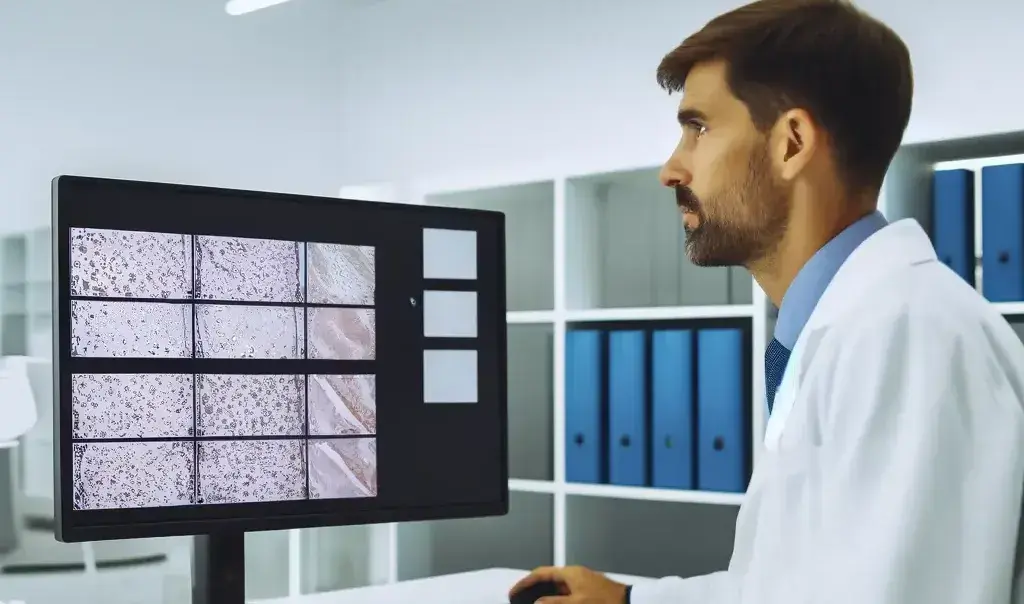
The shortage of pathologists is a significant issue, particularly for small, rural pathology groups. These practices often struggle to attract and retain full-time specialists, which can impede their ability to provide timely and accurate diagnoses. Digital pathology is revolutionizing how these small groups operate, offering tools and techniques that enhance efficiency and accuracy. These advancements can significantly impact workflow and diagnostic capabilities for practices with three to five pathologists.
Recent innovations in digital pathology have made it more accessible and practical for smaller practices. For instance, advancements in digital imaging allow pathology labs to send high-resolution images of slides to remote pathologists. This is particularly useful in subspecialties where accurate diagnosis of complex conditions requires a specialist’s input.
A relevant example is a small pathology lab in a rural area that uses digital pathology to consult with a subspecialized pathologist in another city for complex cases. This quick and efficient collaboration improves the accuracy of diagnoses and accelerates patient treatment timelines.
Enhanced Collaboration: Digital pathology facilitates collaboration with specialists regardless of location, making it easier for small labs to consult with top experts.
Access to Specialty Help: Small pathology groups often face challenges in attracting full-time specialists. Digital pathology allows these practices to send images to remote pathologists, such as subspecialized pathologists, for challenging cases. This method is much faster than traditional medical couriers, ensuring timely consultations and better patient care.
Locum Coverage: When a pathologist goes on vacation or is otherwise unavailable, digital pathology enables seamless locum coverage by allowing remote pathologists to access and review cases without delay.
Business Expansion: Small pathology groups can expand their business and serve more hospitals and clients by leveraging digital pathology. This innovation allows them to secure contracts with more hospitals, as they can ensure that pathologists are available to read slides efficiently, thereby meeting the contractual requirements.
While the adoption of digital pathology offers many benefits, there are challenges, such as high initial costs and the need for training. Solutions include seeking affordable, scalable digital pathology systems and participating in training programs offered by vendors or industry conferences. One practical way for small practices to get started is by purchasing an inexpensive digital pathology scanner, which allows them to digitize slides and begin leveraging the benefits of digital pathology without a significant upfront investment.
Here is a table of scanners. The first four listed are best suited for small-to-medium-sized pathology groups. If you need assistance reaching out to one of these companies, let me know, and we can help you.
VendorPrice of ScannerVolume of SlidesEase of Installation and UseFDA Approval for Primary Clinical DiagnosticsMagnificationGrundium Ocus™40$25,00040 slides per hourModerateNot specified20x/40xAccu-Scope$25,000 - $50,000100 slides per dayModerateNot specified20x/40xMotic Digital Pathology$20,000 - $50,000100 slides per dayModerateNot specified20x/40xOptraSCAN$25,000+6 to 120 slidesModerateNot specifiedNot specifiedHamamatsu Photonics K.K. (NanoZoomer S20MD)$70,000 - $100,00080 slides per hourCompact, easy to integrateYes, for primary diagnosis (IVDR (EU), UKCA (UK), IvDO (CH))20x/40xHamamatsu Photonics K.K.$150,000 - $250,000210 slides per dayNot specifiedYes, for primary diagnosis20x/40xRoche Diagnostics (Ventana DP 200)~$200,000360 slides per dayModerateYes, for primary diagnosis20x/40xLeica Biosystems~$250,000400 slides per dayEasyYes, for primary diagnosis20x/40xPhilips IntelliSite Pathology Solution$100,000 - $300,000300 slides per dayEasyYes, for primary diagnosis40x (0.25 μm/pixel)3DHistech (Pannoramic 1000)~$270,000Up to 1000 slidesModerateNot specified41x/82x
Notes:
Small pathology practices can expect further integration of AI and machine learning in their diagnostic processes. These technologies will continue to evolve, offering more sophisticated disease detection and management tools. Developing comprehensive datasets highlights the potential for more accurate AI applications in everyday pathology practice.
Digital pathology is a game-changer for small pathology groups, providing tools that enhance diagnostic accuracy, workflow efficiency, and collaborative opportunities. By embracing these technologies, small practices can significantly improve their services and outcomes. It also addresses the critical need for specialty help in rural areas and during locum coverage, ensuring continuous, high-quality patient care.
If you're a small pathology practice looking to explore digital pathology, start by attending industry conferences, requesting demos of digital pathology systems, and connecting with vendors who offer scalable solutions tailored to your needs. Engage with the community and stay informed about the latest advancements to make the most of digital pathology. For those just starting, consider investing in an affordable digital pathology scanner to begin realizing the benefits immediately.
Connexis Search Group has recruited pathologists for 22 years and maintains an extensive database of more than 28,000 pathologists in the United States. We place all types of pathologists, including subspecialty pathologists such as GI, Dermatopathology, GU, Molecular, Hematopathologists, and Pediatric Pathologists. Our expertise and vast network enable us to meet the unique needs of small pathology practices, ensuring they have access to the best talent in the field.